
York Travel Guide

Updated: Jan 19
The first Monday of May being a bank holiday meant, for me, the perfect excuse to escape somewhere in England and see a new place. Making the most of the break, I headed to York, a city in the northern Yorkshire region that’s been on my travel list for a long time and about which I’ve heard many wonderful things.

York Trivia:
I probably don’t need to mention which famous city it lent its name to. New Amsterdam in America, under Dutch control, was seized by the English in the 17th century. And since the city was now ours, why not give it a proper English name? It was named after James Stuart, the Duke of York, who would later become king.
According to numerous studies and surveys, York has been voted one of the most livable and safest places in England.
Founded by the Romans in 71 AD, the city still reflects the influence of the Roman Empire at every turn, even though centuries have passed since its founding.
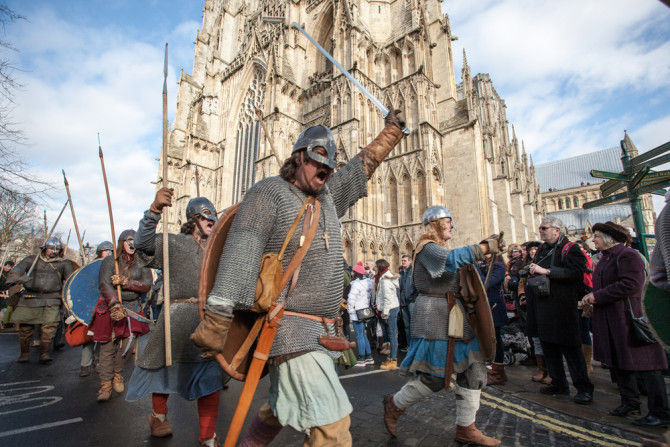
In the 9th century, York also came under Viking rule and, thanks to the Vikings’ trade agreements with Northern Europe, became an important river port at the time.
The old city is completely encircled by city walls. Not only are they the best-preserved historic walls in the country, but York is also famously known as the “walled city.”

After the Battle of Stirling Bridge, the city was occupied by William Wallace on behalf of the Scots. Fun fact: by law, you are allowed to strike a Scot within the city limits of York—but only with a bow and arrow :) This sounds a bit like an urban legend to me—well, even if it’s true, I couldn’t bring myself to harm any Scots.

Guy Fawkes, born and raised in York, is famous for the 1605 attempt to blow up the English Parliament with gunpowder (the Gunpowder Plot), which was also the inspiration for the film V for Vendetta. There’s even a pub named after him, one of the city’s most popular spots. Every 5th of November, we remember him amid the incredible noise of hundreds of fireworks during Bonfire Night.

“Whip-Ma-Whop-Ma-Gate”: the shortest street in York. I’m not joking—that’s really its name. It apparently means something like “neither one thing nor the other.”
Judi Dench, who even carries the royal title of Dame, is another famous York local. They’ve even named a street after her.
How to get there?
There are direct trains from London King’s Cross to York, taking about 2.5 hours. You can enjoy stunning views of the countryside along the way. Return ticket prices vary depending on demand and holidays, but on average, they range between £80–100.
Where to stay?
When I travel by train, I usually prefer staying at a hotel close to the station. Keeping with that tradition, this time I stayed at Alhambra Court Hotel, just a 5-minute walk from York Station. Average hotel prices range from £70–£90 per night.
What to explore?
The perfect starting point to explore the city is York Minster, which dominates the skyline with its massive and majestic presence. One of the largest medieval buildings in England, this highly Gothic cathedral has stood since the 12th century, and its construction took 250 years. Standing in front of it, looking up, it’s hard not to wonder, “Who’s bigger here—you or me?”—because it’s not only enormous and ancient, but its Gothic architecture is full of incredibly beautiful details. Like me, you can take your coffee in hand and admire this magnificent structure as closely as possible.

Visiting the interior is ticketed, but if you like, you can climb 275 steps to the top and enjoy a panoramic view of the city. Normally, I never skip exploring the inside of cathedrals or duomos, but to be honest, when I took a brief look inside, nothing particularly caught my attention. I guess after seeing so many cathedrals, they all start to look the same (!). It’s really more enjoyable to admire it from the outside—wander around and take it all in. (Here I am again, with my incredible blog tips)

Right next to the cathedral, you might notice a handsome ancient statue. Don’t worry—that’s Constantine the Great. York was founded by the Romans in the 1st century, and Constantine declared the Roman Empire here in the 4th century.
Directly opposite, there’s a Roman Column dating back to those times. I think this is the only Roman relic outside the city walls that still remains.
If you ask me what makes York truly fascinating, it’s definitely the ancient city walls. Built by the Romans and completely surrounding the old city, these walls are the only fully preserved medieval walls in England. Stretching 4 km, don’t worry—you can walk the entire length. I personally loved taking in the city views and observing life along the walls as I strolled.

A city with ancient walls—surely it must have a castle, right? Yes, there is York Castle, but over the centuries, while the city walls were carefully preserved, the castle didn’t fare quite as well.

Clifford Tower is the only remaining structure of the castle, and the surrounding area has been turned into the York Castle Museum. Built by King Henry during the Norman era in the 12th century, the tower was used as a prison, a mint, and a lookout for approaching enemies.
If you climb to the top (which I did despite the cold and rain, because I was really impressed by the structure—and bonus, it was free with my English Heritage card, hehe), you can enjoy panoramic views of the city. Right across from it, the York Castle Museum offers a themed exhibition depicting everyday life from 600 years ago.

To get lost in the city’s small, history-filled side streets, head to The Shambles.
This narrow, historic street is full of boutiques, shops, tea rooms, and pubs—Betty’s Tea Room, Ye Olde Pub, and Guy Fawkes among them. If you’re interested in Viking history, you can also visit the Jorvik Viking Centre in the area to see how the Vikings lived in York.

For those of you asking for more historic buildings and museums, here are a few more must-visit spots:
Guildhall – as the name suggests, a place where tradespeople used to gather. The current building is a replica of the 15th-century original, which was destroyed in the Great Fire of 1942.
Mansion House – the home of the Lord Mayor, famous for its historic design.
Treasurer's House – a medieval townhouse housing 300-year-old antiques, paintings, ceramics, and more.
Fairfax House – another medieval home, this one a Georgian mansion.
The museum I’m really glad I took the time to visit in York is the National Railway Museum. Located right opposite the train station, it features royal trains (some like miniature palaces, though our great-grandmother Queen Elizabeth’s train was very modest), the world’s fastest steam locomotive Mallard, the famous London-Edinburgh Flying Scotsman, and Japan’s Shinkansen, the “bullet train” capable of 210 km/h with its distinctive pointed nose.

Yorkshire Museums & Gardens is a park located along the River Ouse, which also contains the ruins of St Mary’s Abbey, once the most powerful and wealthy monastery in Northern England.

If you feel like seeing a bit more greenery and immersing yourself in nature, you can take a walk along the river to Rowntree Park, just a 10-minute walk from the city center.
What to eat?
You can’t go to York without trying Yorkshire Pudding. Don’t be fooled by the name—it’s not the chocolatey dessert we usually think of. England has a whole range of dishes with “pudding” in the name, and they’re quite unique (or rather, a bit weird). I’ll explain all of them in a separate post—stay tuned!

In short, our English friends have a weekly Sunday ritual: the Sunday Roast. What does it include? Roast meat, potatoes, boiled vegetables (like broccoli and carrots), gravy (a rich meat sauce), and Yorkshire pudding (a soft bread made from flour, milk, and eggs). You don’t have to wait until Sunday to try it—every pub menu in York has it.
For the first time in York, I came across the Yorkypud Wrap, which is basically a fast-food version of the Sunday Roast. All the ingredients I mentioned earlier, with the Yorkshire pudding flattened in a panini-style press like a wrap, are stuffed inside along with the roast. Ah, England… you really know how to turn a classic into a “wrap” situation—I got a little teary-eyed.

As for afternoon tea, the most famous spot to visit is Betty’s Tea Room. Be sure to book in advance—it’s very popular.
For café options for lunch or coffee, my recommendations are:
The Perky Peacock – an authentic and cozy riverside café inside the castle area, with great sandwiches.
Brew & Brownie – perfect for breakfast; they make amazing scrambled eggs.
Spring Espresso – I had one of the best flat whites I’ve ever tasted here.
What to drink?
Beer lovers, you’re in luck! York has over 350 pubs and just as many different beers and ales—hence its reputation as England’s beer paradise.
The most famous and oldest pub is Ye Olde Starre Inne, established in 1644. The Golden Fleece is another very old pub and is known as York’s haunted spot—apparently people have seen the ghost of a former owner. I’ll believe it when I see it myself (let’s hope no ghosts follow us, so “haunted” is enough!). Guy Fawkes Pub, as I mentioned, is named after the famous figure and offers a great selection of ales.

If, like me, you’re not really a beer person and prefer gin, then The Evil Eye is the place for you. In front of the bar, the shop window of the same name displays hundreds of gin varieties—I thought, “This must be heaven.”
York Gin Company is the shop of York’s first gin distillery. Inside, you can learn about gin-making ingredients and distillation methods, and, of course, taste their gins. For the first time in my life, I tried chocolate gin, which surprisingly tasted a bit like whisky.
York is a truly enjoyable city to explore. If you find yourself there, you can easily see everything in two days. And now that you have this guide in hand, what more could you need? :)
Finally, I’ll end my post with a saying from the Yorkshire region (very dramatic, I know!):
"Yorkshire Born n Bred, So Tek Thi Find Mi, Or Bugger Off"
Love,
Seçil


Comments